

Diastasis recti is a condition in which the two sides of your abdominal muscles separate, often after pregnancy or significant weight fluctuations.
It can weaken your core, affect your posture, and sometimes cause lower back pain. The right exercises can help close the gap safely, but the wrong movements can make it worse.
What Actually Is Diastasis Recti and How Does It Affect Your Core?
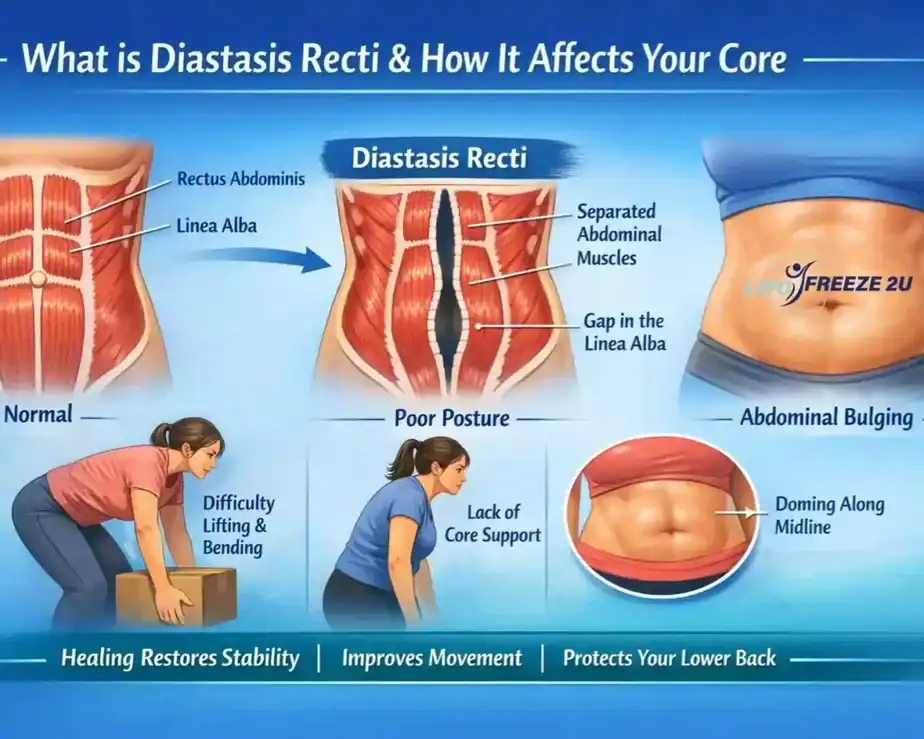
Your rectus abdominis, or the “six-pack” muscle, runs down the center of your abdomen. In diastasis recti Wigston, this muscle stretches apart, creating a gap in the connective tissue (linea alba). See The 10 Benefits of Body Toning for Diastasis Recti Wigston
The impact can be subtle or significant:
- A weak core can make lifting, bending, and even performing daily routine tasks more difficult.
- You experience postural problems due to a lack of deep core support.
- You may notice doming or bulging along your midline when activating your core.
Healing isn’t just cosmetic—it restores stability, improves movement, and protects your lower back.
Why Should You Be Careful With Certain Abdominal Exercises?
Exercises like crunches, sit-ups, full planks, or twisting motions may seem harmless, but can push the abdominal wall outward, increasing the gap. Over time, this can worsen diastasis recti Wigston and cause discomfort.
The goal is to strengthen the core without creating pressure on the midline. Controlled, mindful movements are far more effective than high-intensity workouts.
Achieve Your Dream Body with Non-Invasive Fat Freezing
Which Core Exercises Are Safe and Effective for Healing Diastasis Recti?
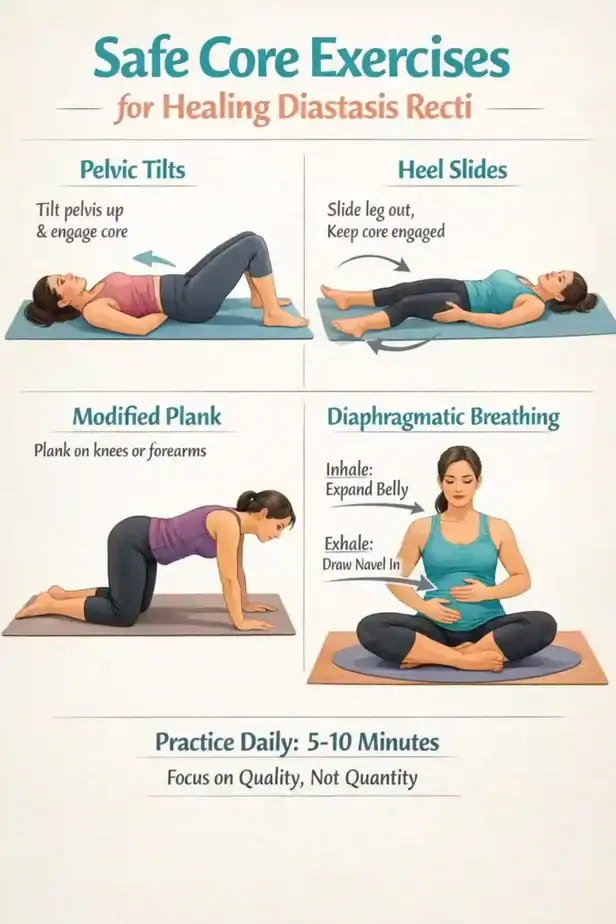
Emphasise strengthening deep core muscles (like the transverse abdominis) rather than just superficial muscles:
- Pelvic Tilts – With your back flat on the ground, tilt your pelvis slightly up while tightening your core. This gently reconnects the muscles.
- Heel Slides — Keeping your core engaged, slide one leg at a time out along the floor. Helps coordinate deep abdominal activation.
- Modified Planks — Start on knees or forearms, keeping the stomach from domming. Gradually progress to longer holds.
- Diaphragmatic Breathing – Breathe in so your diaphragm expands, and breathe out while bringing your belly button towards the spine. Develops muscles deep within the core and postural integrity.
Even short daily practice sessions (5–10 minutes) will yield results if done consistently. Focus on quality over quantity.
What Exercises Should You Avoid If You Have Diastasis Recti?
Exercises to avoid include:
- Traditional crunches or sit-ups
- Full planks or push-ups if they are bulging
- Without core support, heavy lifting
- Twists that put pressure on the central line of the belly
These exercises put excessive pressure on the gap, slowing healing or causing pain.
See Our Diastasis Recti Wigston Treatment Price Here
How Long Will It Take to See Improvements in Diastasis Recti?
Healing time varies:
- Mild cases may see improvement in a few weeks with consistent practice.
- Moderate to severe cases may take 3–6 months.
Patience and correct form are essential. Overdoing exercises too early can make things worse.
When Should You Consult a Professional Before Starting Exercises?
Professional assessment is also advised if you:
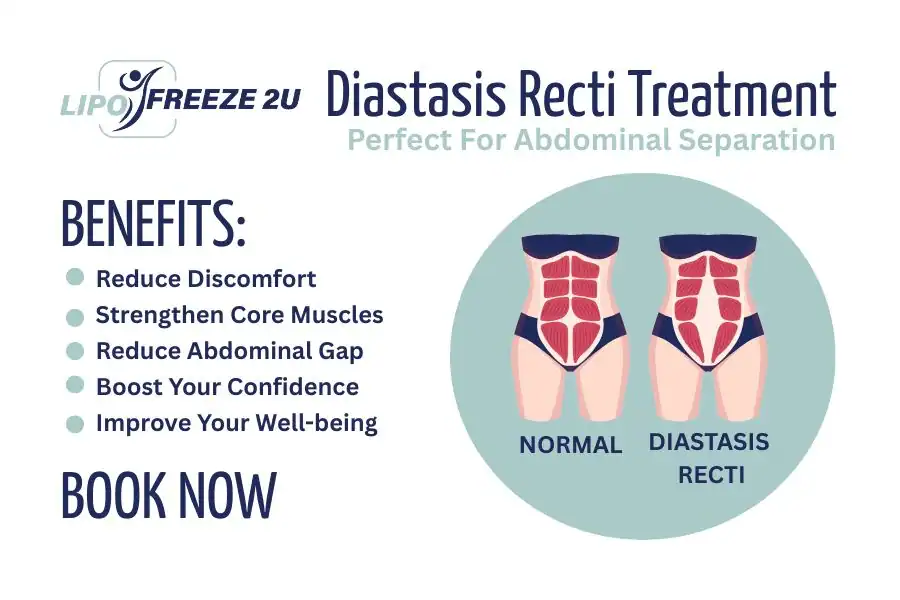
- Have a large gap (more than 2 finger widths)
- Experience pain or discomfort during exercises
- Notice large amounts of doming or bulging along your tummy.
A pro can personalize exercises, track your progress, and avoid more problems.
How Can Body Toning Treatments from Lipo Freeze 2U Help Alongside Exercise?
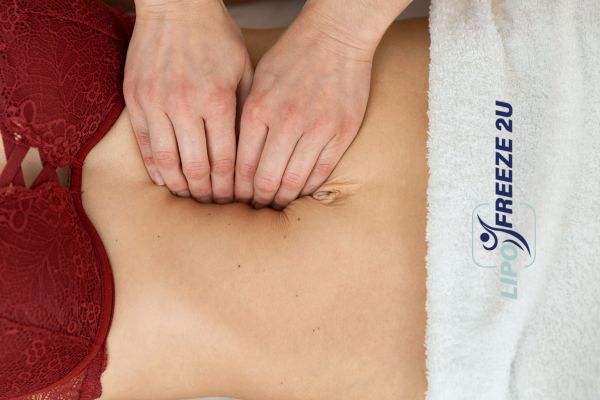
Our body toning treatments Wigston complement safe exercises through:
- Strengthening weak abdominal muscles
- What About Stubborn Fat Around The Midsection
- Enhancing the shaping and toning of the core
Gentle exercises combined with treatment will not only help you achieve faster results but also regain confidence in your core and improve posture.
FAQs : What Exercises Help Close Diastasis Recti (And What to Avoid)
Q: Will gentle core exercises actually close diastasis recti Wigston, or is surgery the only way?
But the majority of mild-to-moderate cases can be greatly improved with specific, gentle exercises designed to strengthen those deep belly muscles. Surgery is usually reserved for severe separations that create functional problems or hernias. These exercises can be safely performed consistently and correctly, making them less invasive and often quite effective for progressively restoring core strength.
Q: Why do classical crunches and sit-ups exacerbate diastasis recti Wigston rather than helping to heal it?
According to a Reputed Clinic, crunches and sit-ups can make abdominal separation worse by pushing your abdominals outward and should be avoided, especially in the first six weeks after giving birth. Unlike vigorous exercises that may exacerbate reality, gentle and inward-drawing exercises protect your core.
Q: Can I do diastasis recti exercises safely during yoga, Pilates, or other workouts?
You can, provided you make adjustments to avoid straining the midline. Avoid unsupported deep twists or heavy lifting. Focus on engaging your abs gently, breathing really slowly, and moving with intention so these practices help, rather than hurt, your recovery.
Q: How do I know if a core exercise is actually hurting my diastasis recti Wigston instead of helping it?
If an exercise makes your belly dome or bulge, triggers pain or strains in your lower back, it might be making your separation worse. Concentrate on moves that maintain a flat midline, recruit the deep abdominal muscles, and feel controlled. If you catch dangerous movements early enough, you can stop doing them and instead learn how to make them better.
Q: In reality, how long does it take to see a visible difference in my diastasis recti Wigston?
Recovery is influenced by your age, muscle recovery, and the consistency of your exercise. Some notice changes in 4–6 weeks, while others may take 3–6 months. Re-formation of muscular tissues and strengthening of connective tissues takes time, so consistency with properly executed exercises, matched with patience, is important for long-term benefits.
Q: What are the core exercises to do every day to safely strengthen my abs, without exacerbating the separation?
Possible daily exercises, safe from weeks 0 to 12 months, are pelvic tilts, heel slides, modified planks, and diaphragmatic breathing. These engage the deep core without blowing out the belly and overloading the connective tissue. This means that periodized, consistent sessions with good form are way better than explosively hammering the intensity while rarely going to such efforts, and this inevitably leads to fewer progression regressions later on.
For Further Information, Please Call Us ON 03300 105 225